
The gods of our Minds
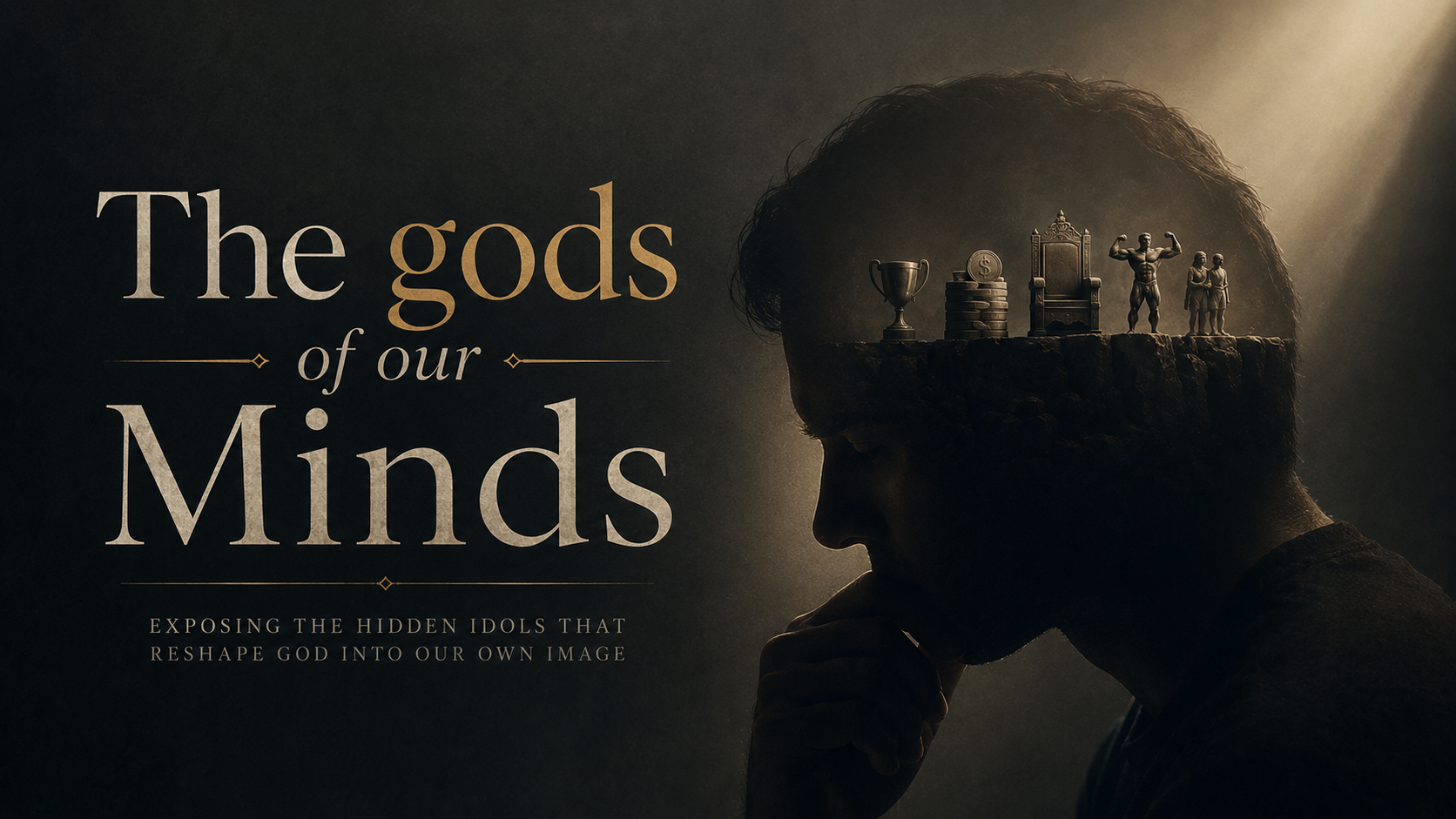
Of all the commandments God gave at Sinai, the one modern Christians seem most eager to defend is the very one God spent some of His strongest language forbidding… The second commandment. That alone ought to arrest us for a moment. It ought to make us slow down long enough to ask whether we have understood the second commandment nearly as well as we think we have. For many of us hear the prohibition against carved images and instinctively place ourselves outside the blast radius of the text. We imagine pagan temples, primitive idols, ancient rituals, and bowing before statues of wood and stone. We think of sins committed by other people in distant lands with incense and shrines and false gods with strange names. But before we dismiss the commandment as something obvious and external, we ought to let the Word of God search us more deeply than that. Because the second commandment is not merely about what human hands carve from wood. It is about what fallen hearts quietly prefer God to be.
“You shall not make for yourself a carved image, or any likeness of anything in heaven above or on the earth beneath or in the water under the earth. You shall not worship them or serve them; for I, YHWH your God, am a jealous God...”
And then Moses gives the reason in Deuteronomy 4:15:
“Take careful heed to yourselves, for you saw no form when YHWH spoke to you at Horeb out of the midst of the fire.”
There is the whole argument. God gave them no visible form because no visible form would tell the truth about Him. No created thing could faithfully contain His glory. No image could communicate His holiness. No likeness could carry the weight of who He is. And so God revealed Himself by His Word. Not by a statue. Not by an image. Not by a visual representation that man could edit, soften, sentimentalize, or control. The invisible God chose to make Himself known through His self-revealing speech, and the moment man trades the Word for something more manageable, more comfortable, or more emotionally satisfying, he has already wandered from the God who is.
And yet, if we are honest, this temptation lives much closer to us than we often realize. The Westminster divines understood this when they said the second commandment forbids “the making any representation of God... inwardly in our mind.” Inwardly. That phrase should unsettle us, because it drags the commandment out of the museum and into the soul. Suddenly the issue is no longer merely whether we would bow before a golden calf. The issue is whether we have quietly begun reshaping the living God within the imagination of our hearts. Calvin famously said that the human heart is a perpetual factory of idols, and he did not mean merely that fallen men create false religions. He meant that sinners are constantly attempting to reduce God into proportions they can emotionally live with. We all feel this pull. Not usually in dramatic acts of apostasy, but in subtle reinterpretations. We prefer versions of God that disturb us less. Versions that wound our pride less deeply. Versions that leave our cherished sins less threatened. Versions that fit more neatly inside our assumptions, our politics, our emotional instincts, our grievances, our comforts, and our preferred way of living.
This is where the second commandment stops being about other people's visible sins and begins pressing into the hidden places of our own lives. This is where we break the commandment in our kitchens, in our cars, in the quiet rationalizations of our thoughts, in the strange dullness that sometimes settles over our repentance. Because if we are willing to listen carefully, our behavior is always confessing something about the god we believe in. Our lips may confess the God of Sinai while our lives slowly preach another. We may sing about His holiness on Sunday while living the rest of the week as though His holiness were mostly theoretical. And because behavior is often louder than profession, the truth about our theology frequently appears most clearly in what we consistently tolerate, excuse, fear, justify, pursue, resent, or refuse to surrender.
Consider how this happens in ordinary life. When sin begins feeling safe to us, when compromise becomes strangely easy, when repentance feels delayed and conviction feels distant, what is happening beneath the surface? We are not merely breaking a rule. Somewhere in the hidden logic of the heart, we have begun imagining God differently than He truly is. When we knowingly cling to sin while assuming all is well, we are behaving as though God is not as holy as His Word says He is. When we nourish bitterness and withhold forgiveness, we are acting as though His mercy toward us was small and conditional. When we fear man and trim our obedience to preserve comfort or reputation, we are living as though God is not truly sovereign over consequences. When we covet what He has withheld, we quietly accuse Him of failing to give wisely. Every sin contains theology within it. Every act of disobedience carries with it some subtle distortion of God's attributes. Not usually explicit. Not articulated. But lived.
And this is why the sin is so dangerous. Because most Christians do not wake up intending to reject God outright. Israel did not do that either. At Sinai they did not say, “Let us abandon Yahweh and worship Baal.” They said, “Tomorrow shall be a feast to YHWH.” They still used His covenant name. They still considered themselves worshipers. They simply wanted a version of Him they could manage. A god they could see. A god they could celebrate on their own terms. A god less terrifying than the One who descended in fire upon the mountain. And if we are humble enough to admit it, we often want the same thing. We want a God whose holiness does not press too sharply upon our conscience. A God whose justice aligns neatly with our preferences. A God who hates the sins we hate while quietly overlooking the ones we cherish. A God who can be interpreted safely through the emotional categories of modern man.
That is why behavioral idols are often far more dangerous than carved ones. The wooden idol can be burned. The metal idol can be melted down. The stone idol can be shattered beneath the hammer. But the inward idols built from fear, sentimentality, pride, comfort, resentment, self-protection, and selective obedience are much harder to expose because they do not sit visibly upon shelves. They settle into assumptions. They hide beneath habits. They quietly shape how we interpret Scripture, how we respond to correction, how we view suffering, how we define love, how we excuse compromise, and how we imagine the character of God Himself. Over time, unless the Lord mercifully interrupts us, we begin confusing the God we have preferred with the God who has actually spoken.
And yet this is precisely why the prophets speak with such force about idolatry. Not because God is insecure, but because He is jealous for His glory and jealous for His people. False gods always deform the people who worship them. The indulgent god eventually leaves us enslaved. The sentimental god leaves us shallow. The god made in our own image can never save us because he is nothing more than a larger reflection of the sinner already collapsing beneath the weight of himself. “To whom then will you liken God? Or what likeness will you compare with Him?” asks Isaiah. The Holy One of Israel will not be reduced into something smaller, safer, softer, or more emotionally manageable. His holiness is not an accessory He removes at the threshold of our comfort. The God who spoke from Sinai still burns with undiminished glory. He will not be reinvented by modern sentimentality. He will not reshape Himself around our preferences. He will not surrender His attributes so that sinners may feel more at ease in their rebellion.
And yet, astonishingly, this same God remains patient with idolaters. That may be one of the most remarkable truths running beneath the whole Bible. Again and again, God confronts His people not merely to destroy them, but to reclaim them. He exposes false gods because He loves His people too much to leave them enslaved to lies about Him. Which means repentance is not merely the painful act of admitting isolated sins. It is the gracious undoing of false versions of God we have slowly learned to trust. And perhaps that is why true repentance often feels both frightening and freeing at the same time. Frightening because the real God is holier than the one we invented. Freeing because the real God is also infinitely more glorious, more steadfast, more righteous, more merciful, and more beautiful than the substitutes we cling to for comfort.
This is why the answer to idolatry is not found in trying harder to manufacture better religious feelings. The answer is returning again and again to the place where God has actually revealed Himself. His Word. Not the god of our assumptions. Not the god of cultural preference. Not the god filtered through therapeutic modernity. The God who has spoken. And ultimately the God who has revealed Himself perfectly in Jesus Christ, “the image of the invisible God.” Notice the glory of that carefully. God forbade images, and then, in the fullness of time, God Himself provided the image. Not carved by human hands. Not imagined by artists. Not reinvented by sentimentality. But the true Christ revealed in history, proclaimed by the apostles, preached in the Scriptures, and made known by the Spirit.
And this Christ is both more terrifying and more tender than the gods we create. He will not flatter our pride. He will not baptize our rebellion. He will not conform Himself to our preferences. But neither will He cast out the sinner who comes to Him in repentance and faith. He receives idolaters. Cleanses idolaters. Sanctifies idolaters. Patiently. Faithfully. Persistently. Which means the Christian life is, in many ways, a lifelong return from false gods to the living One. Ever reforming. Ever repenting. Ever allowing the Word to tear down the distorted images we have constructed and replace them with the glory of the God who truly is. Because the final mercy hidden inside the second commandment is this: God refuses to leave His people worshiping anything less than Himself.